Ankle Flex (Anterior Tibialis Contraction)
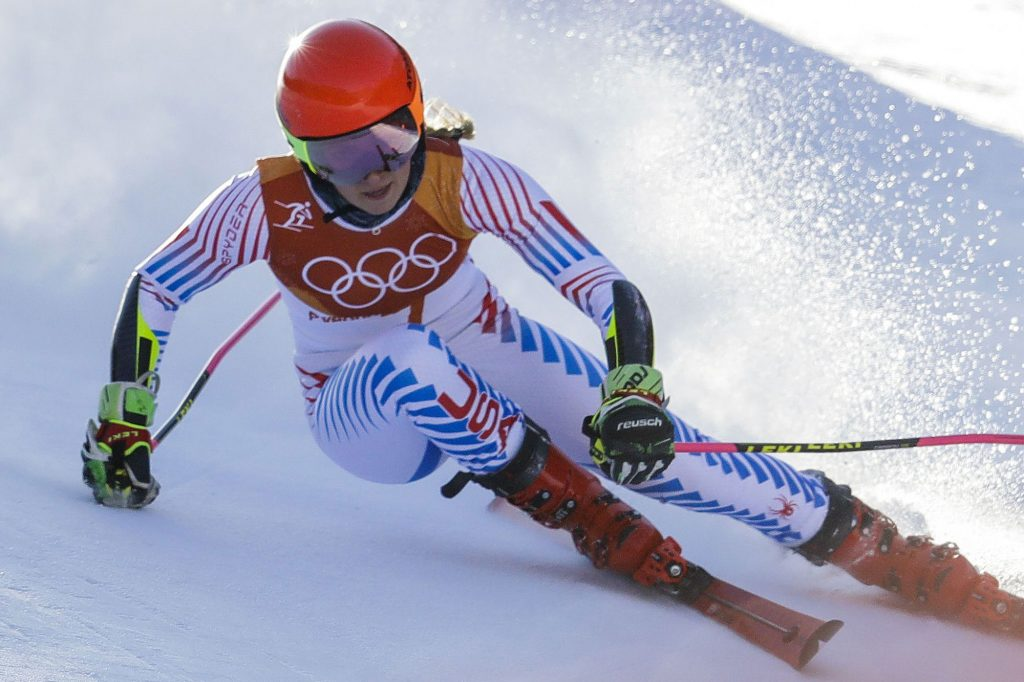
One way to increase pressure on the ski fronts is to flex the ankle inside the ski boot – not by squashing the ankle but by lifting the forefoot toward the shin and creating shin pressure on the cuffs of the ski boots. The boots then act as a lever transmitting force to the ski fronts. Gripping on ice requires pressure on the ski fronts and is strongly aided by the (upward) flexed ankle. Turning power comes mainly from the ski fronts – pressure on the tails of a ski makes it travel straight ahead.
Contracting the shin muscle protects the knee joints.
Keeping the ankle flexed (upwards) protects the knee and helps keep pressure on the front of the ski boot – even while extending the leg.
Extending the (flexed) uphill leg in a turn transition/initiation also serves to protect the knee joint from excessive strain through the quadriceps as the turn progresses.
Pressuring the Fronts of the Skis
When a car travelling forward makes a sudden turn there is an increase in pressure on the front tyres due to them being responsible for deflecting the vehicle in the new direction. In skiing the front of the ski plays the main role in deflecting (turning) the skier but this doesn’t just happen automatically because people tend to defensively avoid pressure on the ski fronts due to fear of falling forward.
Normally people when walking maintain their bodies more or less vertical with respect to gravity and that would be appropriate in skiing for traversing across a slope – but as the skier has to turn downhill they are faced with having to adjust the stance out of the vertical and to be generally perpendicular to the slope. Doing so requires both skill and confidence – which can be undermined by a defensive emotional response. (The root of the word emotion is motere, the latin verb “to move”, with the prefix “e-” meaning “move away”.) The result is the skier tends to remain vertical when pointing down the slope and that puts pressure on the tails of the skis (often through leaning on the backs of the ski boots). When pressure is applied to the tails of the skis they will tend to run straight and not turn.
Racing type turns with free falling dynamics (Centre of Mass (CoM) falling or pushed into the turn) can require an aggressive overall body (CoM) movement forward/downhill into a new turn. Pivoted (braking) turns where the skier remains predominantly on the uphill edges and uses a downhill pole plant for support allows the body to remain more vertical due to the mechanics of the skis working with a lateral swing into the turn. However pressure on the ski fronts remains necessary even for effective pivoting. When pivoting it’s sometimes necessary (as with mogul/bump skiing) to push the tips of the skis downhill with the balls of the feet. (Aggressive mogul skiing requires knees and hips actively bending often more than 90°)
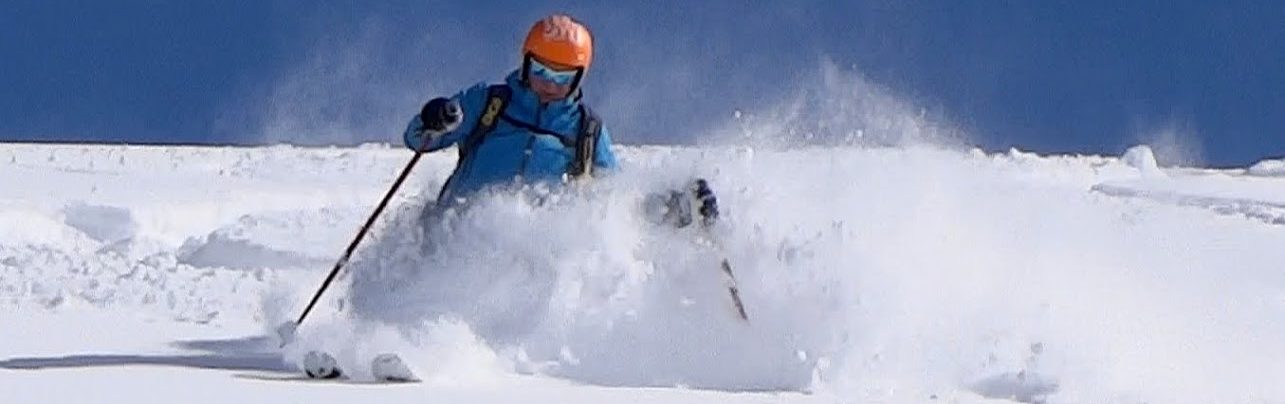
Pressure on the ski fronts is made safe through the use of hip angulation – which brings the centre of mass well to the inside of the turn and allows absorption of bumps etc. Angulation protects the skier from the risk of a face plant over the fronts of the skis – including when skiing in deep snow. Another way to increase pressure on the ski fronts is to flex the ankle inside the ski boot – not by squashing the ankle but by lifting the forefoot toward the shin (still keeping pressure on the balls of the feet) and creating shin pressure on the cuffs of the ski boots. The boots then act as a lever transmitting force to the ski fronts. Gripping on ice requires pressure on the ski fronts and is strongly aided by the flexed ankle.
One exercise to get people to feel the correct pressure on the shins inside their ski boots is to ski downhill backwards.
Dynamics 4 (Advanced Angulation)
Creating “angulation” is exactly like dropping one cheek of your bottom onto a chair placed at the side of your body. This gives the impression of “facing downhill” in shorter turns – which is actually an effect not a cause or intention. The action is centred on a relaxation of the hip joint (outside leg) and a falling into the turn particularly in the second half of the turn . The turn initiation (short to medium radius) is with the skier’s pelvis (not necessarily the chest) facing downhill – thrusting the upper body directly downhill while the skis travel across the hill.