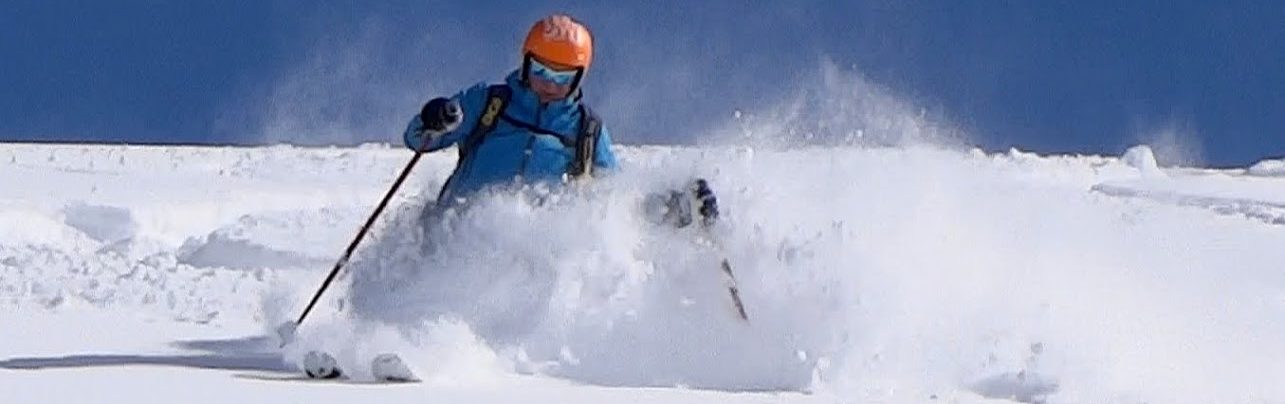

We started off today with working on developing the ability to send the centre of mass different trajectories across the skis in the turn transition.
Leg Retraction – Carving
“Leg retraction” – the extended downhill leg at the end of a turn is retracted to allow the body to cross over the skis into the next turn the fastest way possible – then the new outside leg extends (independent leg action). The video below shows a top World Cup racer using this movement pattern. It’s easier to learn this pattern first and apply it to “normal” skiing before learning how to retract both legs simultaneously with the feet together to absorb bumps.
Moguls/Bumps (Compression Turns)
Here’s a useful video showing proper compression turns at an advanced level. (Warning! – The drills used to “teach” in the clip are mainly inappropriate and fail to show the pivoting nature of bump skiing. However the advanced dynamics used by the demonstrators are correct.)
Competition bumps skiers have their feet close together and many people swear by a “two footed” platform off-piste. This works because both skis pivot always on their uphill edge. The feet are always kept downhill of the body and so are the knees. Using the adductor muscles of both legs pulls the skis together and strengthens the stance. It’s important however to always orient the body on only one hip – preferably the outside one. The hip is the biggest joint in the body and it is very close to the centre of mass. Any confusion around this area leads to confusion everywhere. Motion starts from the centre of mass – so use your outside hip in the turn – pulling it backwards during the turn – to get your reflexes working and your core muscles protecting your back the most efficiently possible.
For bumps the two ski pivot prevents the feet from diverging off in different directions – and it gives two edges for controlling speed in what is after-all a braking form of turning. The overall stance is similar to off-piste but is part of a “compression turn” which has it’s own page here for reference (or soon will have). Avoid resorting to pushing out the heels – it’s always a pulling inwards that’s required.