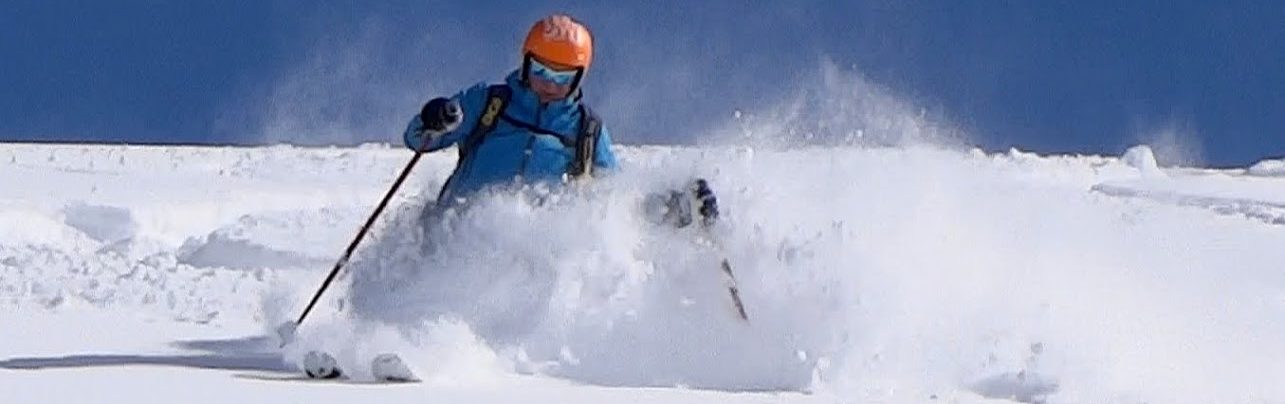
Eloise is a complete first time beginner – skiing parallel first session.
Libby is “technically” also a first time beginner – skiing parallel first session.
Skating/Adductors
Skiing is just disguised skating. The main difference is the skis are wide and have two edges. When diverging the skis outwards at the tips into a skating stance the skis want to flatten on the snow and the stiff shaft of the ski boots will pull the knees outward. The adductor muscles need to be engaged to hold the skis on their inside edges. This is a pattern of muscle use – the adductors of both legs contracting – that should be maintained when skiing parallel. This is partly dependent on the skier’s morphology. If the femurs are naturally directed inwards less adductor use might be appropriate but if slightly bow legged there may be a need to consciously work the adductors.
Only when snowplough braking should the adductors be released to widen the spreading of the tails of the skis from the hip joints.

The other difference between skis and skates: – it’s just that skis bend and scribe arcs on the ground and are generally used on slopes not flat lakes. Skating actions are fundamental for a skier’s development because they involve independent leg action where only one leg at a time is really used. Although skiers can stand on two feet the body is oriented specifically on one hip joint at a time (when turning) and has to function as if standing on one leg. Skating exercises such as skating step turns are helpful in developing basic skills. Skating turns use diverging skis (opposite from snowplough) and incremental stepping of the centre of mass inward toward the turn centre. This is ideally the first sort of turning that any complete beginner should experience – on flat terrain
Everting the Feet
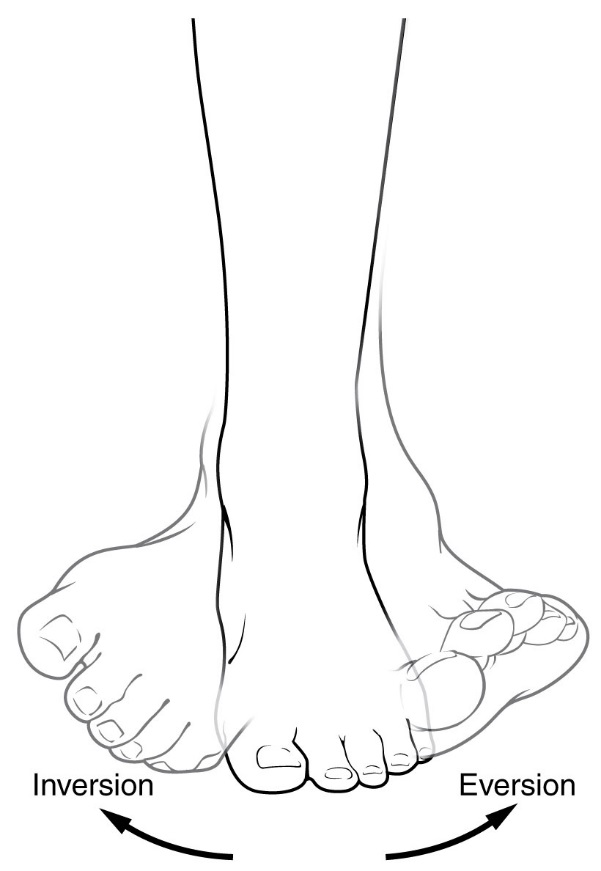
When the skis are parallel the feet still “diverge” (as if skating) inside the ski boot – each foot being turned outward (everted). This obviously isn’t visible. This is to combat the tendency to twist the foot inwards to”turn” the ski directly -a mistake which flattens the ski and causes loss of grip.
Snowplough (Centre of Mass)
First turns are made by simply tightening the adductors in one leg only – to turn left it’s in the right leg. (With narrower ploughs then the adductors of both legs should be engaged -and if there is some speed then control becomes dependent on the turn shape and increased dynamics.)
Weight is always maintained on whatever ski is furthest down the mountain so that it can act as an effective brake. Changes of pressure on any ski are due to geometrical effects between the skis and the slope angle – not “transfer of weight”.
Starting a turn when traversing the slope in a plough requires only a slight movement of the Centre of Mass toward the downhill ski. This ski then slowly feeds the skier into a controlled turn. When facing directly down the fall line, the body being held constantly toward the inside ski of the turn, ensures the outside ski can takeover the completion of the turn. The pressure changes on the skis are automatic – just move the Centre of Mass toward the centre of the intended turn and keep it there from start to finish.
(There’s a tendency for habitual snowploughers to always push out the tail of the uphill ski to get it pointing downhill at the front. Better to push the tail of the downhill ski toward the upcoming turn centre, thus pulling the Centre of Mass that direction. This also reinforces the braking/pivoting action of that downhill ski.)